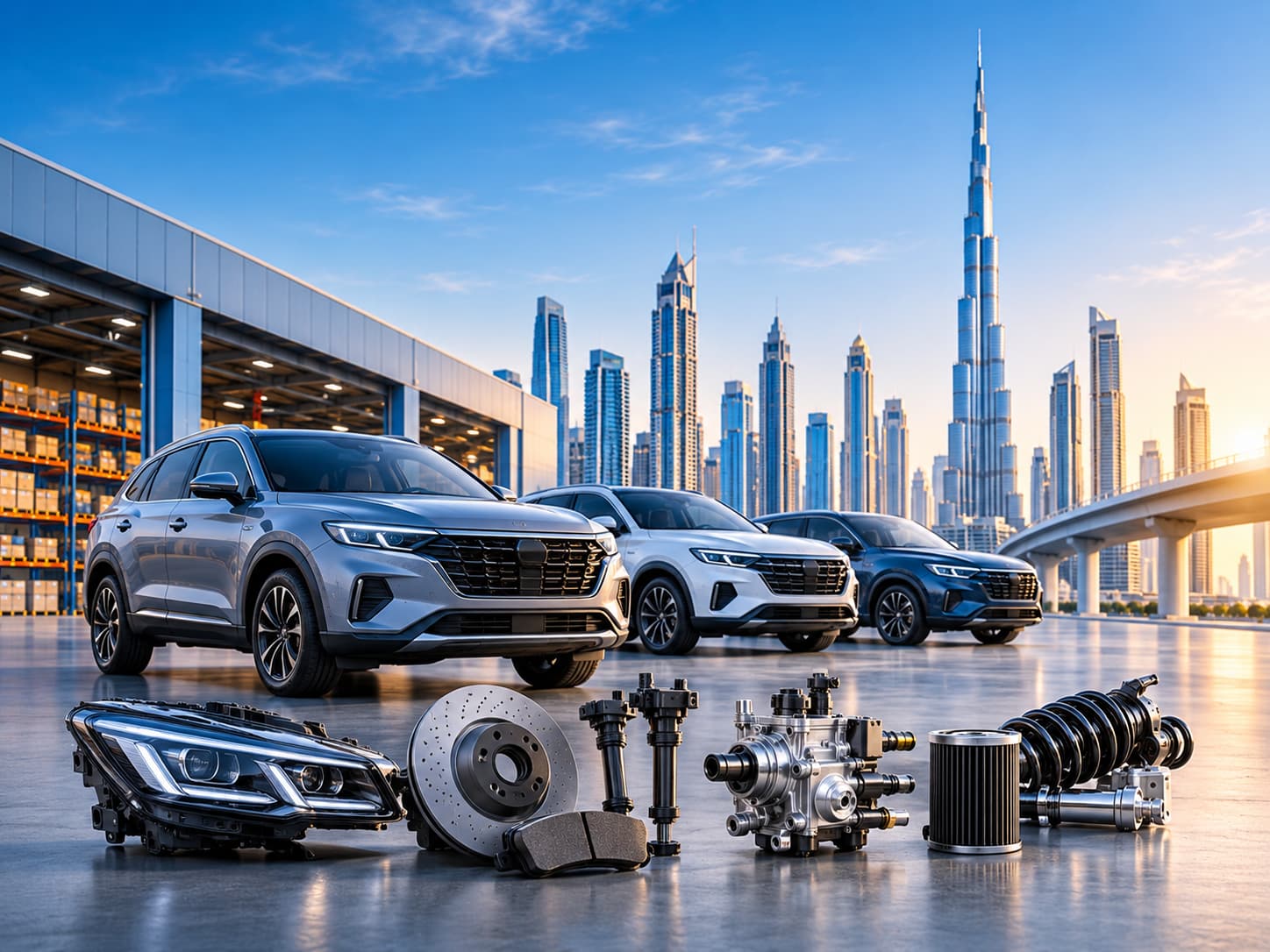
The UAE automotive market is undergoing significant changes in 2026. While new vehicle sales have faced pressure, Chinese automotive brands continue to reshape the competitive landscape, and investments in spare parts logistics are strengthening the country's position as a regional automotive distribution hub.
For auto parts suppliers, distributors, workshops, and retailers, these developments highlight the importance of reliable sourcing, competitive pricing, and fast access to replacement parts.
A Changing Automotive Market
The latest data shows that new car sales in the UAE have declined this year. However, the market is not changing uniformly. Some Chinese brands have demonstrated resilience, reflecting evolving consumer preferences and increasing competition.
For the aftermarket, the key consideration is not only new vehicle sales, but also the number of vehicles already on the road and their ongoing maintenance needs. As the vehicle fleet evolves, demand for model-specific replacement parts and dependable supply channels remains important.
Chinese Cars Create New Aftermarket Opportunities
Brands such as BYD, GWM, Jetour, Chery, Geely, and MG have become increasingly visible in the UAE automotive market.
As more Chinese vehicles enter the local fleet, workshops and parts distributors need better access to compatible components. This creates opportunities across several product categories:
- Engine and fuel system parts
- Ignition and electrical parts
- Lighting and body parts
- Sensors and electronic components
For businesses serving Chinese vehicle owners, accurate part identification, consistent quality, and dependable availability can help build customer trust and long-term relationships.
Dubai Strengthens Its Role as a Spare Parts Distribution Hub
Investment in automotive logistics is another important development. In June 2026, Jebel Ali Free Zone announced a new automotive logistics facility spanning approximately 300,000 square feet, designed to support spare parts distribution across the GCC, Africa, and other markets.
Such developments reinforce Dubai's role in regional automotive trade. For suppliers and distributors, efficient warehousing and local inventory can help shorten delivery times, improve stock management, and support customers across multiple markets.
For purchasers, sourcing parts from established UAE-based suppliers can also offer a practical alternative to importing every order directly from overseas.
What Automotive Businesses Should Prioritise
As the aftermarket becomes more competitive, businesses should focus on four key areas:
✅ Reliable sourcing
✅ Local availability
✅ Competitive pricing
✅ Responsive service
These factors are particularly important for workshops, retailers, and distributors serving a diverse and rapidly evolving vehicle fleet.